
Fan Appreciation Isn't a Tactic. It's a Mindset.
The G.E.V. Framework Behind Music's Biggest Fan Bases
On September 12, 2025, Coldplay played the final show of their Music of the Spheres World Tour at Wembley Stadium. When the confetti cleared, they'd sold 13.1 million tickets across four continents. The most tickets ever sold for a tour in concert history.
It wasn't just the music. Coldplay hasn't had a consensus "best album" in over a decade, and plenty of critics have written them off. But the ticket sales tell their own story: 3.8 million in 2022, 3.2 million in 2023, 3 million in 2024, 3.5 million in 2025. People kept coming back. (And they kept bringing friends.)
They're not the only ones. Fifteen days after Coldplay's final Wembley show, Zach Bryan walked onto the field at Michigan Stadium in Ann Arbor. By the time he played his first note, 112,408 people were there, the most tickets sold for one show in US history. A few years earlier, he'd been recording songs on his iPhone outside a Navy barracks.
So why them? Why now?
These aren't anomalies. They're evidence of a pattern hiding in plain sight, and it comes down to how these artists demonstrate fan appreciation.
Artists Aren't Entertainers. They're Community Leaders.
The artists who build lasting careers understand something fundamental:
They're not just entertainers. They're community leaders.
And the most effective community leaders, whether they're running a city, a company, or a fanbase, operate on three core principles: gratitude, engagement, and value.
This isn't motivational fluff. It's peer-reviewed, Goldman-Sachs-report-level science. Coldplay and Zach Bryan are just two examples of where it shows up most visibly.
Fan Appreciation: The Invisible Currency That Buys Loyalty
Gratitude research published in The Journal of Positive Psychology found that appreciation doesn't just make people feel warm and fuzzy. It's linked to building the kind of social bonds and support that make relationships stronger over time.
When a leader expresses genuine appreciation, it changes the neurochemistry of the relationship. People don't just like grateful leaders more. They trust them more.
Proof of concept: talent management firm Workhuman found that with as few as five moments of recognition per year, less than one "thank you" every two months, turnover drops by 22%.
But what does this have to do with artists leading communities?
What Robert Emmons' Gratitude Research Says About Fan Loyalty
Psychologist Robert Emmons at UC Davis has spent decades studying this. His research found that people who feel genuinely appreciated experience higher levels of joy, optimism, and love, and are far less likely to slip into envy, resentment, or bitterness.
Now translate that from the boardroom to the stage…
Coldplay’s Chris Martin spent time reading individual fans' signs, pointing them out in the crowd, thanking them one by one. At one point, he invited a group of friends on stage to help him sing. A stadium show that somehow felt intimate.
But Martin's fan appreciation wasn't just verbal. It was built into the show itself. LED wristbands turned every fan into part of the light show. Every ticket planted a tree. Every dance on the kinetic floors, or ride on the energy-storing stationary bikes, helped power the next show. Coldplay told 13 million people: your presence here matters, and we built the entire experience to prove it.
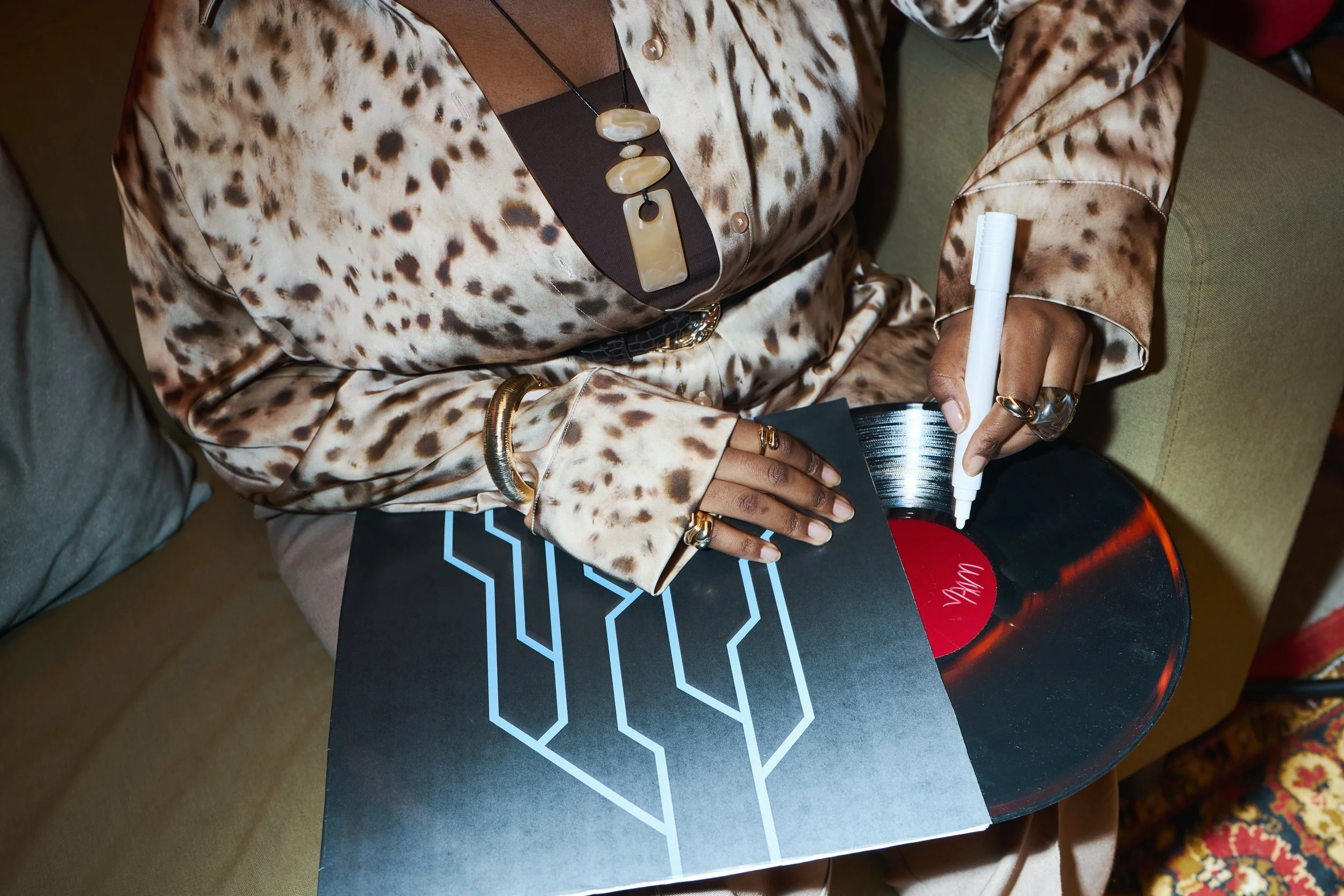
Zach Bryan's version, while different, operates from the same principle. During his Quittin' Time tour, he started gifting guitars to fans at the end of shows. At a charity auction, he personally bid $4,000 on his own DeAnn vinyl, then handed it straight to a fan in the crowd. These are examples of direct, specific ways of saying thank you that stick with the people who showed up.
But it has to be real. Fans have the most sophisticated BS detectors on the planet. A generic "love you guys!!!" in a caption doesn't move anything. Specific, personal, unexpected gratitude does. The artist who DMs a fan who made cover art. The rapper who shouts out the person by name from the meet and greet before the show. The singer who remembers a fan's sign from three cities ago. That's what activates trust at a neurological level, the same neurological response that turns casual listeners into devoted fans."
Fan appreciation isn't just good karma though. It's good business.
A 2024 survey of 1,000 superfans found that 73% felt artists who regularly engage with their fan community come across as more genuine and relatable. And here's the part that matters for your bottom line: the more genuine the artist seems, the more money fans spend. Luminate's 2024 Year-End Report shows superfans spend 80% more on music each month than the average listener, (105% more on physical purchases, and 66% more on live events.)
It literally pays to express gratitude and engage with your people.
Fan Engagement: From Passive Listeners to Active Participants
Here's a stat that should reframe your strategy: 72% of music fans now discover new artists through social media. And the artists who win aren't posting the most content...They're creating the most participation.
The research backs up why this works.A study from Portland State University on parasocial relationships in music found that when artists create opportunities for direct interaction and shared experience, fans stop being consumers and start becoming what researchers described as "relational partners." They feel ownership. They feel responsible for the artist's success.
Tyler, the Creator understood this deeply. When Odd Future exploded in the early 2010s, it wasn't because of a huge marketing budget. It was because their Tumblr page made fans feel like family. It gave fans a front-row seat to the group's actual day-to-day -- a masterclass in how to use storytelling to build your fanbase -- sleeping on each other's floors, dealing with sketchy promoters, eating fries at diners together. By the time Tyler won a VMA, the day-one followers felt like they'd gone on the same journey.
Brandi Carlile built another powerful example of fan loyalty in a completely different genre. Her fan community, the Bramily, operates with a level of mutual care that borders on radical. Her Girls Just Wanna Weekend festival isn't just a concert series in Mexico. It's an annual gathering where fans ride-share with strangers, room-share with people they met online, and sometimes cover each other's trips when money is tight. The festival features an all-female and female-fronted lineup, days of service where fans pack school supplies for local communities, and spontaneous collaboration between artists that makes it feel like something that can't happen anywhere else. As Carlile told Variety, that kind of community and intimacy is almost unheard of in a fanbase.
The International Journal of Music Business Research published a formal Artist-Fan Engagement Model that maps how fans move from initial emotional response, through discovery, to active community participation. The research is clear: engagement creates gravity. The artists who build systems that pull fans deeper into their orbit are the ones who build careers that last.
As one artist in the Portland State study put it, any relationship, if you take care of it, is going to flourish, and you're going to have more committed people.
So how do you actively drive engagement?
Stop broadcasting. Start building feedback loops. (Email is a great place to do this.) Ask questions. Create spaces where fans interact with each other, not just with you. The strongest communities are the ones where members have relationships with one another. Your job is to be the reason they gathered.
Value: How to Build a Fanbase That Buys Into More Than the Music
Kevin Kelly's "1,000 True Fans" theory proposed that a creator needs just 1,000 people willing to spend $100 a year to make a living. The math is clean. The reality is more nuanced... Kelly himself later acknowledged that few artists pull it off with music alone.
But the principle holds up: you don't need millions of casual listeners. You need a core community that finds so much value in what you offer that they keep coming back, keep buying, and keep telling their friends.
And value doesn't just mean music.
Chance the Rapper proved this by literally giving the music away for free.Coloring Book was the first streaming-only project to win a Grammy for Best Rap Album. Chance never sold it, never signed a major label deal. Instead, he built value that went beyond the songs: he founded SocialWorks, a Chicago nonprofit focused on youth empowerment, and personally donated $1 million to Chicago Public Schools when state funding hit a crisis point, which triggered contributions from the Chicago Bulls, Google, and Jewel-Osco. The New Chance Fund ultimately raised $2.2 million for local schools. Chance still made $33 million that year, according to Forbes, without selling a single album. His pitch wasn't "buy my record." It was "I'm building something for our community, and supporting me means supporting that."Fans bought tickets and merch because they were buying into a purpose, not just a product.
Tyler, the Creator took a different path to the same place. Golf Wang started as Odd Future merch, loud hoodies and cartoonish designs. By 2022, it had a flagship store on Fairfax Avenue in Los Angeles, a luxury sub-line with Converse that sold out instantly, and annual revenue in the tens of millions. The brand works independently of his music. People who've never heard his albums buy Golf Wang for the aesthetic alone. Add Camp Flog Gnaw, the festival he owns and curates, and you've got an artist who built an entire world: music, fashion, festival, film, fragrance. Each piece feeds the others.
Nipsey Hussle was the blueprint for this thinking. He told Mass Appeal that artists need to see themselves as content creators with a product line, not just musicians with a catalog. He pointed to Disney's model: the music is the IP, but the value extends into clothing, experiences, education, and community development. Nipsey built The Marathon Clothing store, created Vector90, a STEM co-working space in South Central LA, and launched Our Opportunity, a coalition for redeveloping underserved neighborhoods. Every venture added value to his community, his brand, and his fans' sense that supporting Nipsey meant supporting something bigger than a record.
The data backs this up industry-wide. Luminate reports that superfans engage with artists in five or more distinct ways: streaming, social media, physical purchases, merch, and live events. These fans are 54% more likely to discover new music first, 59% more likely to seek personal connections with artists, and 43% more likely to participate in artist communities.
The Pareto Principle holds in music like it does everywhere else. Roughly 80% of revenue comes from 20% of fans. Luminate's data showsthat 20% of US music listeners qualify as superfans, and they spend $113 per month on live events alone (66% more than the average listener). They spend $39 per month on physical purchases, more than double the average. Seven out of ten superfans buy their favorite artist's merch, compared to just 26% of general listeners.
We're not saying you need to create something at the same scale as these examples, but the takeaway here is simple: Your music is the entry point, not the entire offering. Think about what your community actually needs, not just what they'll buy, but what would genuinely improve their lives or make them feel like insiders. That's value.
The G-E-V Mindset: How It All Connects
Here's what ties this whole framework together…It's not three separate strategies. It's a flywheel.
Fan appreciation builds trust. Trust increases engagement. Engagement reveals what your community values. Delivering value deepens the gratitude your fans feel toward you, and toward each other. And the cycle speeds up.
Coldplay's gratitude toward fans and the planet drives deeper engagement: fans keep showing up, keep participating in the show itself. That engagement tells Coldplay what their community values, and they deliver on it with more sustainability innovations and inclusive experiences, like partnering with KultureCity to make shows accessible for fans with sensory needs. The community responds with even more loyalty: 13 million tickets, the most attended tour in history.
Zach Bryan's direct, personal gestures of gratitude, gifting guitars, handing a fan his own vinyl, build the same kind of trust at a smaller scale. Fans feel appreciated and seen, and he keeps delivering value through unpolished live shows and a refusal to compromise authenticity for commercial polish. His community grows not through algorithms, but through trust, until 112,408 of them show up at The Big House.
Brandi Carlile creates a space where women and the LGBTQ+ community feel safe and celebrated. The Bramily engages by caring for each other, and she delivers value through experiences like Girls Just Wanna Weekend that fans can't have anywhere else. A fan community that feels more like family grows stronger every year.
The artists who struggle are almost always missing one piece of the flywheel. They might make incredible music but never engage with fans. They might engage constantly on social media but never express real appreciation. They might be the most grateful person in the room but never create anything beyond the music itself.
The G-E-V Mindset isn't about being perfect. It's about recognizing that lasting careers in music are built on the same foundation as any thriving community: gratitude, engagement, and value.
You're not just an entertainer. You're a community leader. Act like one.
Need help figuring out what that might look like in your music career? Let’s chat.